Somalia sodium sulphur batteries

High-Energy Room-Temperature Sodium–Sulfur and Sodium
Rechargeable room-temperature sodium–sulfur (Na–S) and sodium–selenium (Na–Se) batteries are gaining extensive attention for potential large-scale energy storage applications owing to their low cost and high theoretical energy density. Optimization of electrode materials and investigation of mechanisms are essential to achieve high energy density and

ADWEA
The ADWEA – Sodium Sulphur Battery Energy Storage System is an 8,000kW energy storage project located in Abu Dhabi, Abu Dhabi, United Arab Emirates. Free Report Battery energy storage will be the key to energy transition – find out how.

Sodium Batteries: A Review on Sodium-Sulfur and Sodium-Air Batteries
Lithium-ion batteries are currently used for various applications since they are lightweight, stable, and flexible. With the increased demand for portable electronics and electric vehicles, it has become necessary to develop newer, smaller, and lighter batteries with increased cycle life, high energy density, and overall better battery performance. Since the sources of

Stable Dendrite-Free Sodium–Sulfur Batteries Enabled by a
Ambient-temperature sodium–sulfur batteries are an appealing, sustainable, and low-cost alternative to lithium-ion batteries due to their high material abundance and specific energy of 1274 W h kg–1. However, their viability is hampered by Na polysulfide (NaPS) shuttling, Na loss due to side reactions with the electrolyte, and dendrite formation. Here, we

Stable all-solid-state sodium-sulfur batteries for low
Sodium-sulfur (Na-S) batteries with sodium metal anode and elemental sulfur cathode separated by a solid-state electrolyte (e.g., beta-alumina electrolyte) membrane have been utilized practically in stationary energy storage systems because of the natural abundance and low-cost of sodium and sulfur, and long-cycling stability [1], [2].Typically, Na-S batteries

N/O dual coordination of cobalt single atom for fast kinetics sodium
Room-temperature sodium-sulfur batteries are promising grid-scale energy storage systems owing to their high energy density and low cost. However, their application is limited by the dissolution of long-chain sodium polysulfides and slow redox kinetics. To address these issues, a cobalt single-atom catalyst with N/O dual coordination was derived from a

Somalia Sodium Ion Battery Market (2024-2030) | Share, Growth
Somalia Sodium Ion Battery Market (2024-2030) | Share, Growth, Competitive Landscape, Size & Revenue, Companies, Segmentation, Trends, Forecast, Industry, Outlook, Analysis, Value

Sodium-sulfur battery
A sodium-sulfur battery is a type of battery constructed from sodium (Na) and sulfur (S). This type of battery exhibits a high energy density, high efficiency of charge/discharge (89—92%), long cycle life, and is made from inexpensive, non-toxic materials.

室温钠硫电池硫化钠正极的发展现状与应用挑战
Room temperature sodium sulfur batteries are regarded as the next generation of large-scale energy storage systems because of its high energy density and the abundant resources of sodium and sulfur.

A Critical Review on Room‐Temperature Sodium‐Sulfur
Among the various battery systems, room-temperature sodium sulfur (RT-Na/S) batteries have been regarded as one of the most promising candidates with excellent performance-to-price ratios. Sodium (Na) element accounts for

Intercalation-type catalyst for non-aqueous room temperature sodium
Ambient-temperature sodium-sulfur (Na-S) batteries are potential attractive alternatives to lithium-ion batteries owing to their high theoretical specific energy of 1,274 Wh kg−1 based on the

Sodium Sulfur Batteries Market Trends
The value of the Sodium Sulfur Batteries market is projected to grow to US$ 1,808.14 Million with an estimated CAGR of 30% by 2032. Owing to benefits such as high efficiency, high power density, longer life, higher discharge depth, faster response time, and temperature stability, sodium sulphur batteries are experiencing rapid adoption as opposed to conventional

Stable Long‐Term Cycling of Room‐Temperature
In particular, lithium-sulfur (Li−S) and sodium-sulfur (Na−S) batteries are gaining attention because of their high theoretical gravimetric energy density, 2615 Wh/kg as well as the low cost and non-toxicity of sulfur. 2, 3

Progress and prospects of sodium-sulfur batteries: A review
A commercialized high temperature Na-S battery shows upper and lower plateau voltage at 2.075 and 1.7 V during discharge [6], [7], [8].The sulfur cathode has theoretical capacity of 1672, 838 and 558 mAh g − 1 sulfur, if all the elemental sulfur changed to Na 2 S, Na 2 S 2 and Na 2 S 3 respectively [9] bining sulfur cathode with sodium anode and suitable

Revitalising sodium–sulfur batteries for non-high-temperature
Rechargeable sodium–sulfur (Na–S) batteries are regarded as a promising energy storage technology due to their high energy density and low cost. High-temperature sodium–sulfur (HT Na–S) batteries with molten sodium and sulfur as cathode materials were proposed in 1966, and later successfully commercialised f

Here''s What You Need to Know About Sodium Sulfur (NaS) Batteries
The sodium sulfur battery is a megawatt-level energy storage system with high energy density, large capacity, and long service life. Learn more. Call +1(917) 993 7467 or connect with one of our experts to get full access to the most comprehensive and verified construction projects happening in your area.

Unconventional Designs for Functional Sodium-Sulfur Batteries
Sodium-sulfur (Na–S) batteries that utilize earth-abundant materials of Na and S have been one of the hottest topics in battery research. The low cost and high energy density make them promising candidates for next-generation storage technologies as required in the grid and renewable energy. In recent years, extensive efforts have been

Sodium Sulphur Battery
A unique reference book which contains a critical review of the history and development of the sodium sulphur battery; a theoretical basis for its operation; and a very good survey of design techniques and performance. There are numerous excellent drawings and illustrations.

NAS batteries: long-duration energy storage proven at
There are many long-duration energy storage (LDES) technologies that are starting to go into commercial use, but most of them are in their early stages, and certainly do not come with the same track record as the

Sodium-Sulfur Batteries with a Polymer-Coated NASICON-type Sodium
The shuttling of dissolved sodium polysulfides through conventional porous separators has been a challenging issue with the development of room temperature sodium-sulfur (RT Na-S) batteries. In this study, a NASICON-type Na + -ion solid-electrolyte membrane, Na 3 Zr 2 Si 2 PO 12, is used as a polysulfide-shield separator.

Room‐Temperature Sodium–Sulfur Batteries and Beyond:
Future prospects are explored, with insights into other alkali-metal systems beyond sodium–sulfur batteries, such as the potassium–sulfur battery. Finally a conclusion is provided by outlining the research directions necessary to attain high energy sodium–sulfur devices, and potential solutions to issues concerning large-scale production

A novel sodium-sulphur battery has 4 times the capacity of
A novel sodium-sulphur battery has 4 times the capacity of lithium-ion batteries. The new sodium-sulfur batteries are also environmentally friendly, driving the clean energy mission forward at a

Na2S Cathodes Enabling Safety Room Temperature
Room temperature sodium-sulfur (RT-Na/S) battery is regarded as a promising next-generation battery system because of their high theoretical specific capacity, and abundant availability of anodes and

Low‐Temperature Sodium–Sulfur Batteries Enabled by Ionic
Therefore, durable Na electrodeposition and shuttle-free, 0.5 Ah sodium–sulfur pouch cells are achieved at −20 °C, for the first time, surpassing the limitations of typical LHCEs. This tailoring strategy opens a new design direction for advanced batteries operating in fast-charge and wide-temperature scenarios.

NAS batteries: long-duration energy storage proven at
Sodium-sulfur (NAS) battery storage units at a 50MW/300MWh project in Buzen, Japan. Image: NGK Insulators Ltd. The time to be skeptical about the world''s ability to transition from reliance on fossil fuels to cleaner,

A stable room-temperature sodium–sulfur battery
High-energy rechargeable batteries based on earth-abundant materials are important for mobile and stationary storage technologies. Rechargeable sodium–sulfur batteries able to operate stably at
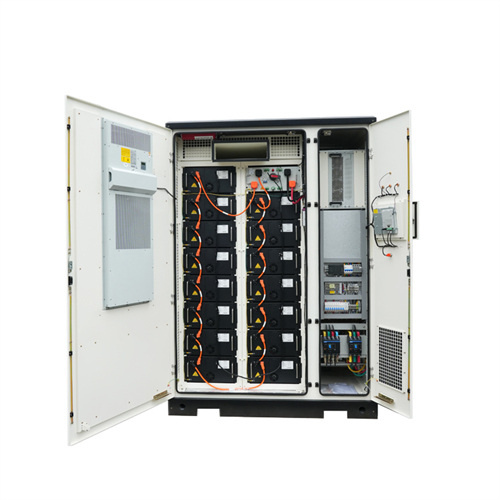
Na2S Cathodes Enabling Safety Room Temperature Sodium Sulfur Batteries
Room temperature sodium-sulfur (RT-Na/S) battery is regarded as a promising next-generation battery system because of their high theoretical specific capacity, and abundant availability of anodes and cathodes. Nevertheless, the direct use of sodium metal could result in the dendrite growth, causing the safety concerns.

Recent advances in electrolytes for room-temperature sodium-sulfur
Metal-sulfur batteries seem to be a good substitute/replacement for existing high cost lithium-ion batteries because such cells have a two-electron-redox process to obtain high theoretical specific discharge capacity (1672 mA h g −1 compared to 250 mA h g −1 for LiCoO 2 insertion cathodes in Li-ion batteries) from low cost electrode materials [[20], [21], [22], [23]].

Long-life sodium–sulfur batteries enabled by super-sodiophilic
Sodium–metal batteries (SMBs) are an appealing sustainable low-cost alternative to lithium–metal batteries due to their high theoretical capacity (1165 mA h g−1) and abundance of sodium. However, the practical viability of SMBs is challenged by a non-uniform deposition and uncontrollable growth of dendrites

Achieving High-Performance Room-Temperature Sodium–Sulfur Batteries
Despite the high theoretical capacity of the sodium–sulfur battery, its application is seriously restrained by the challenges due to its low sulfur electroactivity and accelerated shuttle effect, which lead to low accessible capacity and fast decay. Herein, an elaborate carbon framework, interconnected mesoporous hollow carbon nanospheres, is

Sodium–sulfur batteries
Rechargeable sodium–sulfur (Na–S) batteries are regarded as a promising alternative for lithium-ion batteries due to high energy density and low cost. Although high-temperature (HT) Na–S batteries with molten electrodes and a solid beta-alumina electrolyte have been commercially used for large-scale energy storage, their high working

Long-life sodium–sulfur batteries enabled by super-sodiophilic
Sodium–metal batteries (SMBs) are an appealing sustainable low-cost alternative to lithium–metal batteries due to their high theoretical capacity (1165 mA h g−1) and abundance of sodium.

Sodium–Sulfur Cells with a Sulfurized Polyacrylonitrile Cathode
Room-temperature sodium–sulfur (Na–S) batteries are recognized as promising candidates for next-generation scalable energy storage systems due to their high energy density and cost-effectiveness. However, several challenges persist, including the shuttle effect of polysulfide and the compatibility of sodium metal with electrolytes. Herein

Sodium-Sulphur Batteries with High Energy Storage
Sodium-sulphur batteries provide a low-cost option for large-scale electrical energy storage applications; New conversion chemistry that yields an energy density three times higher than that of lithium-ion batteries; More than ten years'' experience in the design, production and integration of various energy storage technologies

6 FAQs about [Somalia sodium sulphur batteries]
What is a sodium sulfur battery?
A sodium–sulfur (NaS) battery is a type of molten-salt battery that uses liquid sodium and liquid sulfur electrodes. This type of battery has a similar energy density to lithium-ion batteries, and is fabricated from inexpensive and low-toxicity materials.
What is a high temperature sodium sulfur battery?
High-temperature sodium–sulfur (HT Na–S) batteries were first developed for electric vehicle (EV) applications due to their high theoretical volumetric energy density. In 1968, Kummer et al. from Ford Motor Company first released the details of the HT Na–S battery system using a β″-alumina solid electrolyte .
Are sodium-sulfur batteries suitable for energy storage?
This paper presents a review of the state of technology of sodium-sulfur batteries suitable for application in energy storage requirements such as load leveling; emergency power supplies and uninterruptible power supply. The review focuses on the progress, prospects and challenges of sodium-sulfur batteries operating at high temperature (~ 300 °C).
Are room-temperature sodium sulfur (RT-na/S) batteries a good choice?
Among the various battery systems, room-temperature sodium sulfur (RT-Na/S) batteries have been regarded as one of the most promising candidates with excellent performance-to-price ratios.
How does sulfur affect a high temperature Na-s battery?
Sulfur in high temperature Na-S batteries usually exhibits one discharge plateau with an incomplete reduction product of Na 2 S n (n ≥ 3), which reduces the specific capacity of sulfur (≤ 558 mAh g −1) and the specific energy of battery.
What is a sodium ion battery?
Sodium-ion batteries (NaIBs) were initially developed at roughly the same time as lithium-ion batteries (LIBs) in the 1980s; however, the limitations of charge/discharge rate, cyclability, energy density, and stable voltage profiles made them historically less competitive than their lithium-based counterparts .
Related Contents
- Somalia solar batteries windhoek
- Hungary sodium batteries
- Saint Barthélemy sodium ion batteries for renewable energy
- What are the photovoltaic energy storage sodium water batteries
- Somalia sistem fotovoltaic 5kw cu baterii
- Somalia solar energy savers
- Photovoltaikanlage kaufen Somalia
- Somalia solar panel for home government scheme
- Fraser solar Somalia
- Somalia 80ah solar battery price in
- Somalia global energy solutions
- Transparent solar panels Somalia